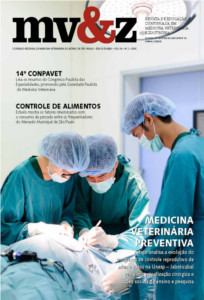
Evolution of reproductive control program for dogs and cats, held at Unesp, Jaboticabal-SP, from 2007 to 2014
DOI:
https://doi.org/10.36440/recmvz.v14i2.31812Abstract
The population control of dogs and cats is a public health
concern. This report describes the activities of the Academic
Extension of the College of Agricultural and Veterinary
Sciences of UNESP in Jaboticabal/SP - Brazil aimed at surgical
sterilization of stray dogs and cats, with social actions
related to teaching and research. In 2007, the first year
of the project, 129 pets were sterilized, whereas in 2014,
between January and October, 1538 animals were sterilized,
which shows the increase in program acceptance by the
local community. All the activities carried out contributed
towards the academic and professional training of students
of the extension project, as well as residents participating in
the program. It can be concluded that the development of
surgical sterilization programs of dogs and cats by educational
institutions, combining research, teaching, and extension
practices, is a viable option for veterinary medicine teaching
practices.
Downloads
Published
Issue
Section
License
1. Autores mantém os direitos autorais e concedem à revista o direito de primeira publicação, com o trabalho licenciado sob a https://creativecommons.org/licenses/by/4.0/.
2. Autores têm autorização para assumir contratos adicionais separadamente, para distribuição não-exclusiva da versão do trabalho publicada nesta revista (ex.: publicar em repositório institucional ou como capítulo de livro), com reconhecimento de autoria e publicação inicial nesta revista.
3. Autores têm permissão e são estimulados a publicar e distribuir seu trabalho on-line (ex.: em repositórios institucionais ou na sua página pessoal) a qualquer ponto antes ou durante o processo editorial, já que isso pode gerar alterações produtivas, bem como aumentar o impacto e a citação do trabalho publicado (Veja O Efeito do Acesso Livre).
How to Cite